OCD Hypnotherapy vs CBT: Which Treatment Is Better?
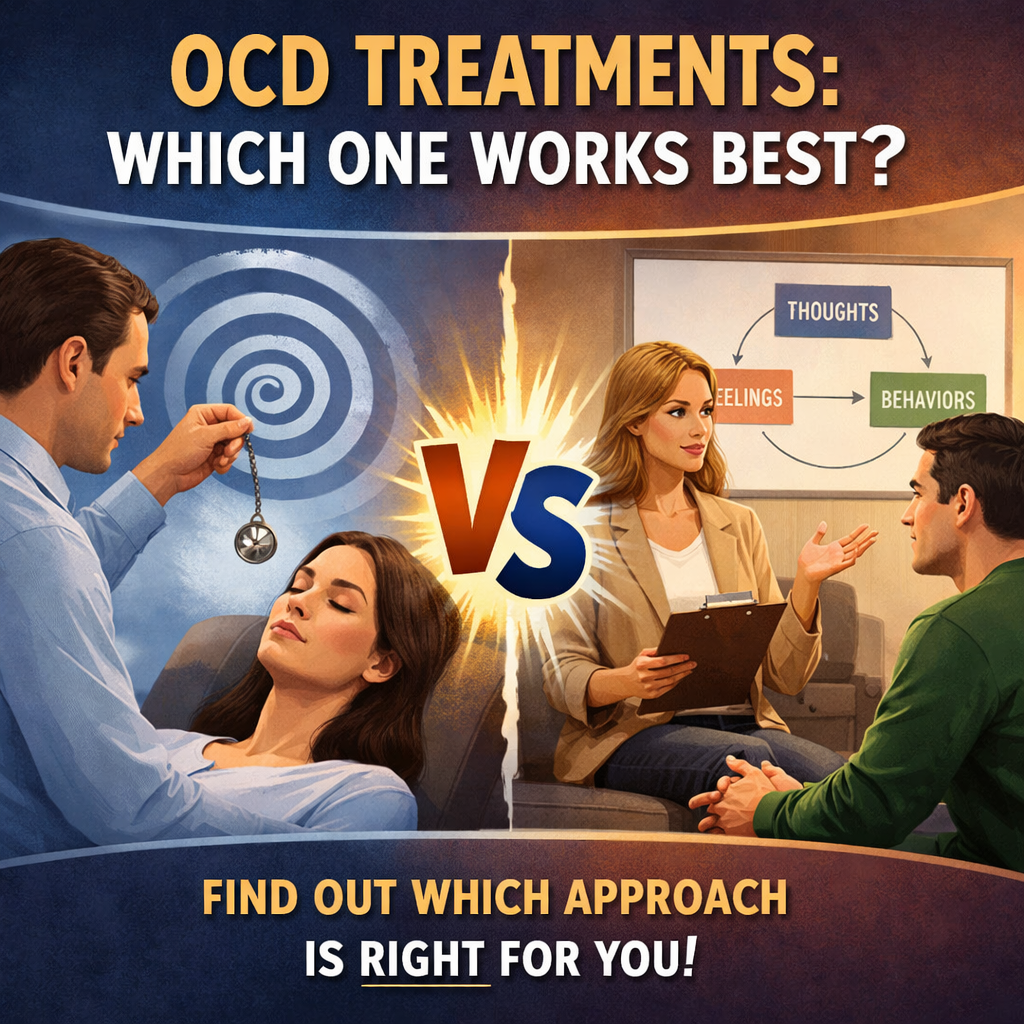
Living with OCD can feel exhausting the intrusive thoughts, the compulsions, the constant mental noise. If you're exploring treatment options, you've likely come across both OCD hypnotherapy and Cognitive Behavioural Therapy (CBT). Understanding what each offers helps you make a confident, informed decision about your mental health journey.
What Makes These Two Approaches Different?
CBT, particularly Exposure and Response Prevention (ERP), is widely regarded as the gold-standard clinical treatment for OCD. It works by helping you consciously face fears and resist compulsions. It's structured, evidence-based, and typically delivered over multiple weekly sessions.
OCD hypnotherapy, on the other hand, works at a deeper, subconscious level. Rather than teaching coping strategies, it aims to reshape how your mind responds to triggering thoughts in the first place, often reducing anxiety before conscious resistance is even needed.
Which One Actually Works?
Both approaches have genuine merit, but they suit different people:
- CBT works well for those who prefer logical, step-by-step frameworks.
- Hypnotherapy for OCD tends to benefit people whose anxiety is deeply rooted in emotional or past experiences.
- Some individuals find combining both delivers the strongest, most lasting results.
- Hypnotherapy can reduce the emotional intensity that makes CBT exercises harder to commit to.
"Is Hypnotherapy Safe for OCD?"
Yes when delivered by a qualified practitioner, it's a safe, non-invasive option. It doesn't involve losing control or sleep; it's a focused state of deep relaxation where the subconscious becomes more open to positive change.
Ready to explore whether OCD hypnotherapy is right for you? Speak with a certified therapist who understands both approaches because the best treatment is the one that aligns with how your mind works.